
Building a complete product from scratch
For PixieHog, we built the website and application from scratch, including the integration. The product connects a Shopify store to PostHog so teams can explore shopping journeys and better understand their visitors.
PixieHog is a CeladonWorks project. Our delivery covered both the product’s presentation and the connector itself: explaining its purpose, supporting installation and giving merchants an interface to control data collection.
Turning a technical integration into a guided setup
The starting point is practical: a merchant has a Shopify store and wants to use PostHog without building the connection themselves. The website introduces the product and directs visitors to the application and its documentation.
Onboarding brings together Shopify installation, the PostHog project key and API host selection. The setup screen then provides access to both tracking modes, with a visible connection status. This makes the relationship between technical settings and the merchant’s next action easier to follow. Read the getting-started guide.
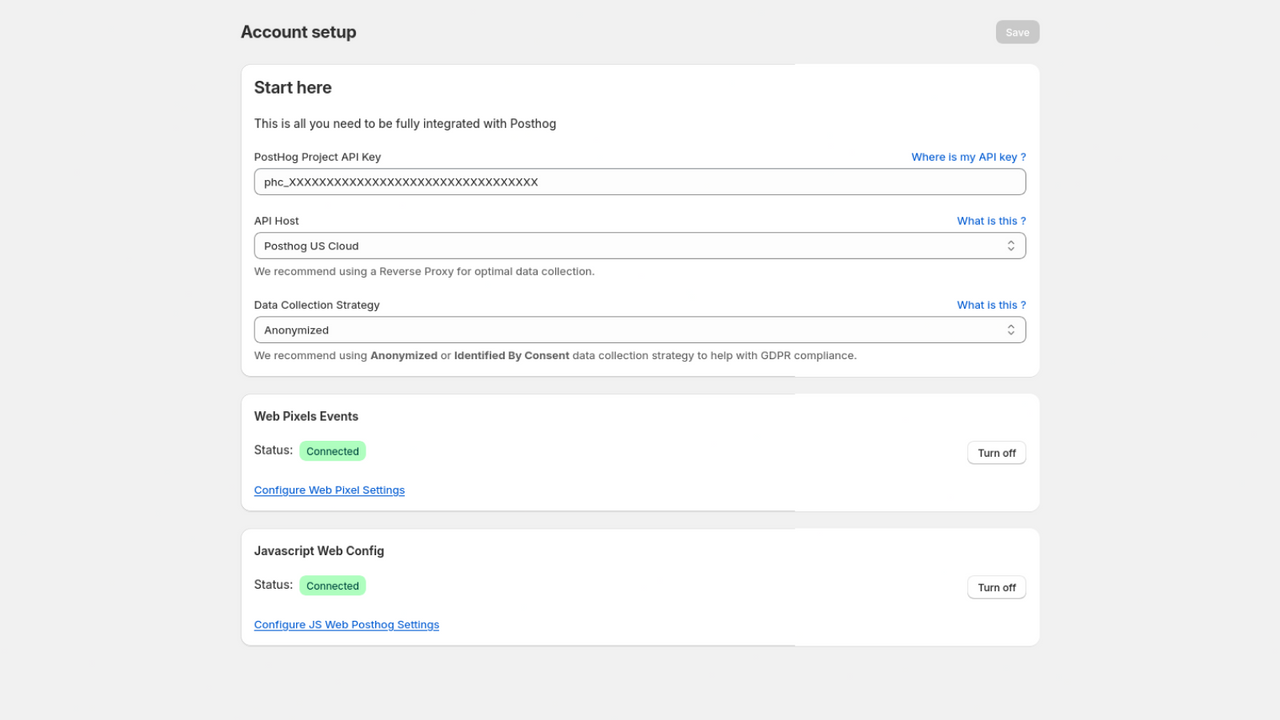
Actual interface published on the Shopify app listing. Click to enlarge.
Connecting Shopify events to PostHog analysis
The connector offers two complementary paths. Web Pixel events cover commerce actions such as browsing, adding products to the cart and progressing through checkout. The JavaScript mode provides configuration for more advanced PostHog capabilities, including session recordings. Merchants can manage these settings inside the app. Explore the configuration guide.
The integration also handles event structure. Merchants can keep Shopify’s format or select PostHog’s ecommerce specification. For example, product_added_to_cart maps to Product Added, while checkout_completed maps to Order Completed. Switching formats affects new events; historical events retain their original structure. View the event mapping.
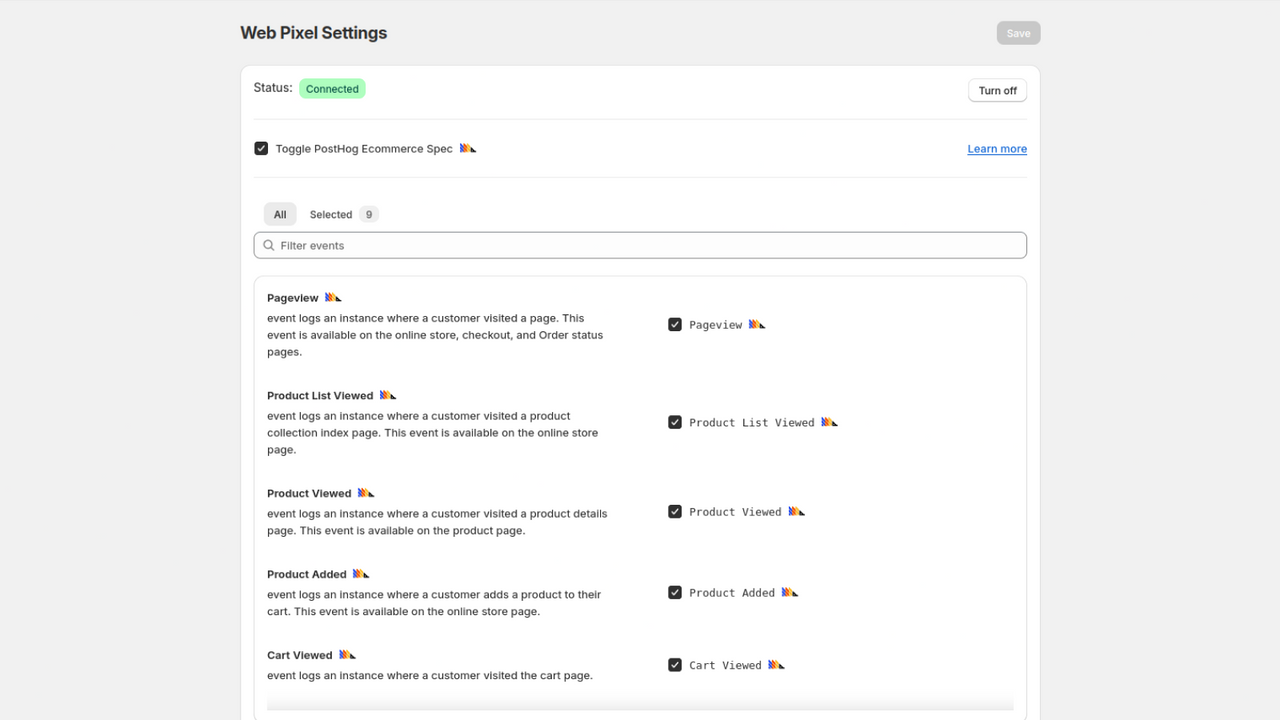
Event selection in PixieHog’s publicly documented interface.
Making collection choices visible
Data handling is part of the product. PixieHog exposes multiple strategies and uses Shopify’s Customer Privacy API for consent-based identification. Its documentation also explains the limits: withdrawing consent does not automatically delete previously collected data. Merchants remain responsible for their configuration and for handling deletion requests. Read about collection strategies.
Delivering a usable, documented product
The delivered experience brings together a marketing website, an app available on the Shopify App Store, a configurable integration and public documentation. The project’s value lies in turning a technical connection into a product merchants can install, understand and adjust.
This work demonstrates our ability to build a complete Shopify application and connect its user experience to the systems behind it.
Visit PixieHog · View the Shopify app · Explore the public repository